Magazine · Investment
The 5.1% trap: why your first investment property costs you money every month
The brochure shows a yield. Your bank statement shows a loss. Between them sit four line items no listing shows you.
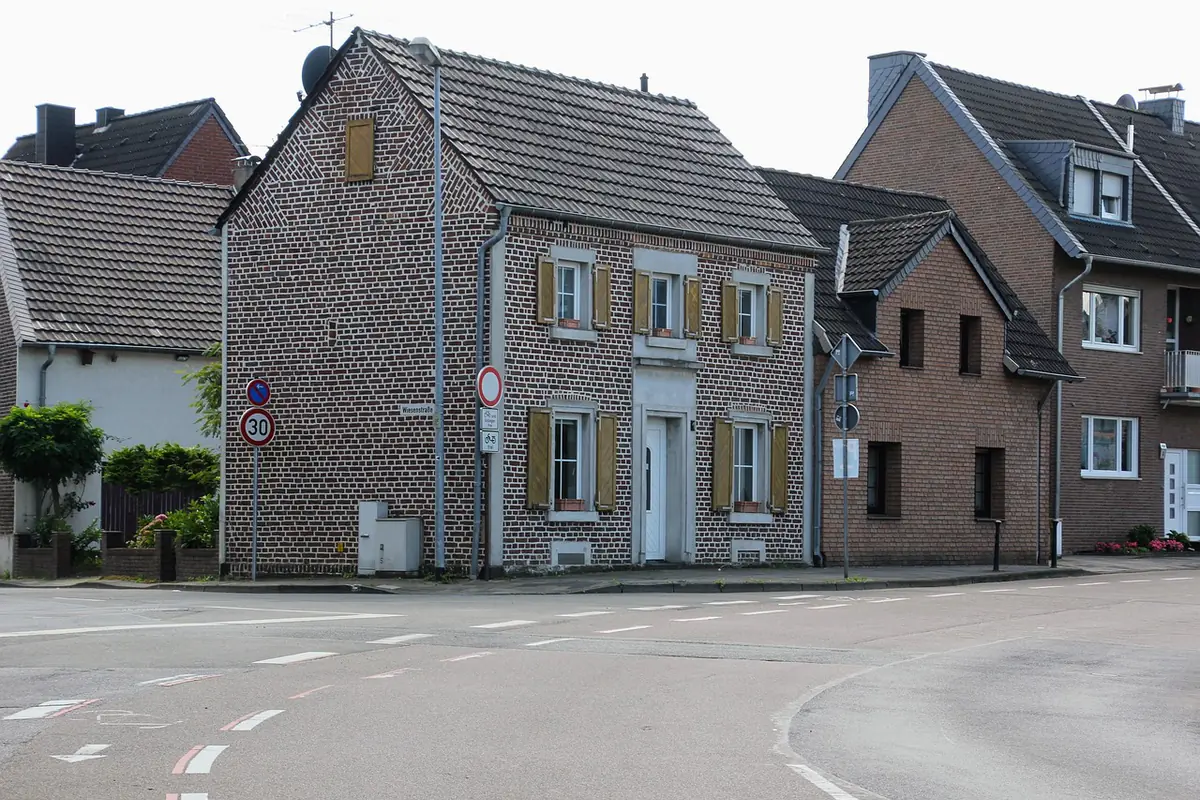
A two-room flat, 62 m², asking price €145,000, cold rent €615. The brochure says, in bold: “5.1% yield”. The maths looks airtight: €7,380 annual rent divided by €145,000 is 5.09%.
Anyone calculating that way has missed the four line items that sit between a portal metric and your actual bank balance. After interest, repayment, non-recoverable service charges and closing costs, those same €615 produce no surplus, they produce a monthly loss.
This article takes the four line items one by one, with figures you can re-calculate yourself. By the end you can check any listing in a few minutes instead of believing it.
Item 1: debt service, interest and repayment
Rates for ten-year German mortgages sat in a band of roughly 4.1% to 4.5% in 2026, depending on the loan-to-value ratio [1][2]. Let us be deliberately conservative: 4.2% interest and the customary 2% initial repayment.
That produces an annuity of 6.2% of the loan per year. At 85% leverage, a €123,250 loan against a €145,000 price, that is €7,642 a year, or €637 a month. Cold rent is €615. The payment is already €22 above the rent, before a single other cost has even started.
| Item | Value |
|---|---|
| Purchase price | €145,000 |
| Loan at 85% LTV | €123,250 |
| Interest + repayment | 4.2% + 2.0% = 6.2% p.a. |
| Monthly paymentown calculation | €637 |
| Cold rent | €615 |
| Buffer before all other costsnot a 5.1% yield, a shortfall | −€22/month |
Item 2: the service charge you cannot pass on
Listings usually quote one service-charge figure. It has two completely different parts. Recoverable are the operating costs under the German operating-costs ordinance, water, waste, property tax, insurance, cleaning. Not recoverable are management fees and the contribution to the maintenance reserve.
Those non-recoverable parts you pay entirely yourself. In our example that is €140 a month. The €22 shortfall from item 1 therefore becomes a shortfall of €162, every month, regardless of rent, vacancy or fixed-rate period. Over a year that is €1,944 you top up.
Item 3: the closing costs no listing mentions
In Germany the price attracts transfer tax, notary and land-registry fees, and the agent commission. Transfer tax ranges from 3.5% to 6.5% depending on the federal state. Together with notary, registry and commission, the total typically lands between roughly 9% and 12% of the price, and that is normally paid from equity, not from the loan.
That money raises the investment base without generating a single euro of rent. In the example: roughly €13,000 of equity that never appears in the portal’s yield, but very much appears in yours.

Item 4: retrofit risk under the Building Energy Act
A change of ownership does not trigger a duty to fully refurbish. It does trigger specific retrofit duties, and those cost four figures depending on the building. Under § 35 of the German Building Modernisation Act the owner must ensure the top-floor ceiling is insulated where it does not meet the minimum thermal protection standard under DIN 4108-2; the heat transfer coefficient may not exceed 0.24 W/(m²·K) [3]. § 69 of the same act additionally requires limiting the heat loss from hot-water and heat distribution pipes and fittings [3].
These retrofit duties are not the same as a full refurbishment, and the numbers are far apart. For a complete refurbishment market benchmarks quote roughly €1,000 to €1,500 per m² of living space; energy-efficiency upgrades to KfW standard around €1,200 to €1,800 per m² [4][5]. At 62 m² of living space that would be €62,000 to €111,600, up to three quarters of the €145,000 purchase price. The statutory retrofit duties alone are considerably cheaper: ceiling and pipe insulation typically land between €3,000 and €8,000 depending on the building. The gap between those two numbers is the point: do not be the buyer who pays for a full refurbishment when only the retrofit duty is due. And do not be the seller who sells the retrofit duty as a full refurbishment.
The fifth item: what the bank calculates once you are done
The four items above calculate cash flow. The bank calculates something else, and it is why properties like this regularly end in “we would need more equity after all” at the financing meeting. It does not test gross yield but the debt service coverage ratio (DSCR): the ratio of the surplus the property generates to the debt service it costs.
Let us work it through for our property. Net operating income is cold rent minus non-recoverable service charge: €615 − €140 = €475 a month, so €5,700 a year. Debt service is the €637 monthly annuity, so €7,644 a year. That gives a DSCR of €5,700 / €7,644 = 0.75.
Almost nobody knows the second threshold: the break-even interest rate. It is the rate above which the property costs you money every month instead of carrying itself. It follows from the same figures. For cash flow to be zero, debt service would have to fall to €475 a month, so €5,700 a year. On a €123,250 loan at 2% initial repayment that corresponds to a nominal rate of roughly 2.6%. Every percentage point above that means a four-figure annual amount you top up.
The fixed-rate period is therefore not a formality. If it expires and market rates are then higher than at signing, cash flow does not move by percentage points but by three-figure monthly amounts — and permanently, while rent can only be adjusted once a year.
Two properties, the same number in the listing
So far this is the calculation for one property. The actual point only becomes visible in comparison. Take a second property with an identical €145,000 purchase price and an identical €615 cold rent, so the same advertised gross yield of 5.1%. The only difference is the building: built 1998 instead of 1974, energy class C instead of F, heating from 2016 instead of 2003, a well-filled maintenance reserve, no deferred maintenance.
| Item | Value |
|---|---|
| Property A (1974): cash flow after all items | −€162/month |
| Property B (1998): cash flow after all items€30 less contribution because the reserve is funded | −€132/month |
| Property A: net yield | 3.2% |
| Property B: net yieldwithout €18,000 of capex | 3.8% |
| Property A: DSCR | 0.75 |
| Property B: DSCR | 0.79 |
| Property A: equity tied up | €52,750 |
| Property B: equity tied up€18,000 less, with better cash flow | €34,750 |
Both properties would have looked identical in the portal. Both carry the same bolded number, the same cold rent and the same purchase price. And yet: property B ties up €18,000 less equity, produces 0.6 percentage points more net yield and requires €30 less top-up per month.
That difference does not come from a capital-growth expectation, not from location, not from market timing. It comes from two items in two documents almost nobody reads: the contribution to the maintenance reserve in the service-charge statement, and the deferred maintenance in the minutes of the owners’ association meeting.
The most important finding of the comparison, however, is the uncomfortable one: property B is not a walkover either. Its DSCR is 0.79, still below the bank threshold of 1.2. The difference between the two is therefore not “buy” versus “do not buy”. It is the difference between a proposition that can be made to carry itself with more equity or a lower price, and one that stays tight even then. That is exactly why the negotiated price is the decisive lever, not the location.
How to check it in four steps
- Isolate the non-recoverable service charge. Pull management fees and the maintenance reserve out of the service-charge statement, that is the real monthly burden.
- Add the closing costs of your federal state. Look up the transfer-tax rate, allow roughly 1.5 to 2% for notary and registry, and use the actual commission rate.
- Calculate interest and repayment as an annuity, not as “rate times loan”. Repayment is part of what decides cash flow.
- Use a renovation range by trade, not a flat rate. A roof in Munich costs differently than in Gera; a per-square-metre flat rate blurs exactly the costs that break a deal.
- Listing: gross yield
- 5.1%
- After closing costs and renovation: net yield(€615 − €140) × 12 / €176,000, see the derivation below
- around 3.2%
- Cash flow after all items
- −€162/month
- Additional capex (retrofit duties, heating)
- approx. €18,000
- Break-even rent
- approx. €777/month
Break-even rent is the cold rent at which cash flow after all items is exactly zero. Here it is €777: €637 of payment plus €140 of non-recoverable service charge, because those are the two items the rent has to carry. The property’s cold rent of €615 sits clearly below it, which is why you top up every month. That is not an opinion about the location. It is arithmetic.
Important for context: €777 is the threshold above which the property carries itself. It is not the rent you would need to make a profit. Renovation, maintenance and vacancy come on top of that, here around €18,000 of additional capex. Confusing break-even rent with cold rent confuses the zero line with the target.
For completeness, the derivation behind the table values, so you can check every figure. Purchase price €145,000, closing costs €13,000 (that is roughly 9%, the lower bound of the 9 to 12% band mentioned above), renovation €18,000. That gives a total investment of €176,000.
- Gross yield: €615 × 12 = €7,380 annual cold rent, divided by the €145,000 purchase price = 5.1%.
- Net yield: (€615 − €140) × 12 = €5,700, divided by the €176,000 total investment = 3.2%. The €140 deduction is the non-recoverable service charge, because it burdens the rent without producing anything in return.
- Cash flow: €615 rent − €637 payment − €140 service charge = −€162 a month.
- Break-even rent: €637 payment + €140 service charge = €777. Only above that cold rent is cash flow zero.
Why a spreadsheet is too slow for this
The four items above fit on one page. In practice they arrive across a dozen listings a week, each with different assumptions, a different federal state, a different year of construction. The bottleneck is not the arithmetic but the gathering: service-charge statement, tax rate, build year, energy class, condition.
Cadruno takes over exactly that part. You enter the address of a listing, the system reads the key figures, computes interest, repayment, non-recoverable costs and closing costs by federal state, adds a renovation range across 20 trades, and shows cash flow after tax. Every number carries its origin: listing, input, derivation, model or assumption.
The result is not a buy recommendation. It is the basis for the one decision you actually have to make: can this location really bear the rent this property needs? If not, the asking price is too high, and that is a number you can evidence instead of haggling over.
Five objections that come next
Anyone who has read this far usually has one of these five thoughts. Each is legitimate, and each can be answered with the same calculation.
- “I will check this myself in a spreadsheet.” For one property, that works. It fails on data provenance, not on arithmetic: the non-recoverable reserve contribution sits in one line of the service-charge statement, the deferred maintenance in the minutes of the owners’ association meeting. What you do not have, you cannot enter.
- “Single properties are risky, that is just normal.” Single-property risk is normal. A DSCR of 0.75 on a property advertised at a 5.1% yield is not. The number says the listing’s yardstick and the bank’s yardstick have nothing to do with each other.
- “I know the market, I do not need a tool.” Then you need it as a cross-check. The test is not “is the tool right” but “does it diverge from my read, and why”. That divergence is the information.
- “Nobody can estimate renovation costs reliably.” Not to the euro. But a range by trade with a regional factor is something different from “something will come up eventually” — and a range you can name in a price conversation is worth more than a number only you know.
- “I have no offer on the table, I am just looking.” That is exactly when the effort is lowest and the value highest. After a viewing and a notary appointment, a correction is expensive; beforehand it costs fifteen minutes.
Frequent questions
Is a spreadsheet not enough?
For a single property, yes. The effort lies in sourcing the assumptions, not in the maths, and it restarts with every new listing. Once you review more than one or two properties a week, sourcing becomes the bottleneck.
How do I know which transfer-tax rate applies?
The rate is set by law per federal state and ranges from 3.5% to 6.5%. It follows the property’s location, not your residence. Cadruno determines it automatically from the listing’s location.
Is the renovation range not just a guess?
It is a range with a buffer instead of a wishful number. It does not replace a tradesperson’s quote, but it shows before the viewing whether the property can carry the work at all. That is where deals break, not at the notary appointment.
What is the DSCR, and why should it matter to me?
The DSCR is the debt service coverage ratio: net rental income divided by annual debt service. It shows whether a property carries its own loan. Many German banks apply a minimum of 1.2 for investment-property financing [6]. In the worked example above the figure is 0.75 — the property does not cover its loan. That metric decides the financing conversation, not the gross yield from the listing.
What is the break-even interest rate?
The rate above which a property costs money every month instead of carrying itself. It follows from net operating income and repayment. In the example the nominal rate would have to fall to roughly 2.6% for cash flow to be zero. Because the fixed-rate period ends and rent can only be adjusted within limits, that gap is the real risk — not the purchase price.
What does it cost to use?
Entry is free and covers three analyses per month, without a credit card. Paid plans go beyond that; they are not required for the four-item check shown here.
Sources
Every figure in the text is either our own re-calculable example or evidenced by these sources.
- Interhyp: Bauzinsen aktuell
- Statista: Bauzinsen, monatliche Entwicklung in Deutschland
- GModG-Infoportal des Bundes: Nachrüstpflichten (§ 35, § 69 GModG)
- Baufivergleich: Kernsanierung Kosten 2026
- MyHammer Preisradar: Altbausanierung Kosten 2026
- imvestr: DSCR Immobilien — Formel, Richtwerte und Bankschwellen (DSCR ≥ 1,2)
This article is not investment, tax or legal advice. Worked examples use rounded assumptions and replace neither a trade quote nor a financing commitment.