Magazine · Value-add
From listing to cost schedule: how to lower a purchase price with numbers
“That is too expensive for me” ends a conversation. A cost schedule by trade ends a price discussion, in your favour.
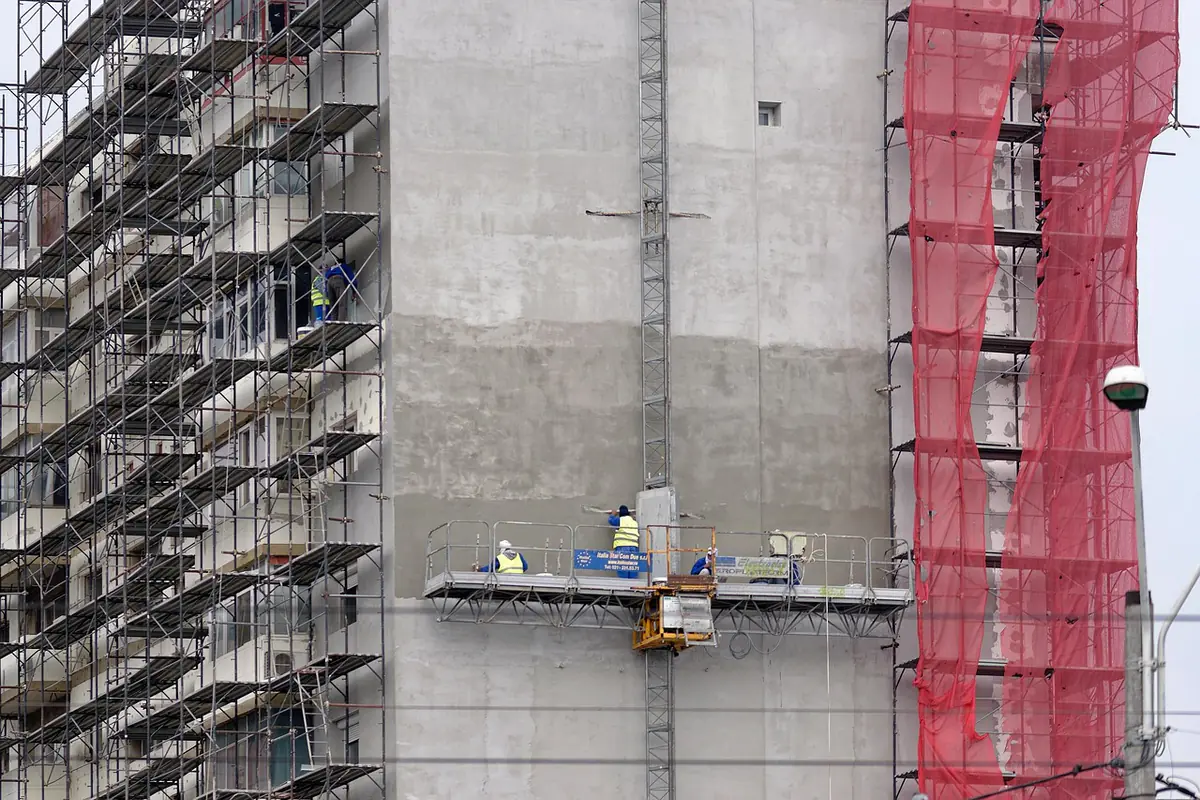
Fully refurbished properties sell at prices that leave an investor nothing. Properties with deferred maintenance instead sit in the portal for weeks, not because they are bad, but because buyers cannot quantify the work.
That is where the return is created. Not by haggling, but by evidence: show the seller which measures are due, what they cost and how that affects the income value, and you are no longer negotiating taste.
This article shows the calculation and the two tax pitfalls that cost the most money along the way.
Why per-square-metre flat rates fail
Current market benchmarks put a full refurbishment at roughly €1,000 to €1,500 per m² of living space, and energy-efficiency work to KfW standard at around €1,200 to €1,800 per m² [1][2]. Those bands are useful as a sanity check and useless as a negotiating argument.
The reason is simple: a flat rate contains no decision. A seller can reject it without refuting anything. An itemised schedule names the measure, the scope and the amount. To disagree, you have to contest a number, which is far harder.
The cost schedule: seven items that are almost always due
In properties built between 1950 and 1985 the same trades recur. The schedule below is a worked example for a 74 m² flat built in 1972 in a simple location, deliberately a range, not a point value.
Important for reading the schedule: it is a template, not a finding. Not every one of the seven trades is due in every property, and the regional factor shifts the amounts further. On a specific property you delete the items that are demonstrably done and document the rest with photographs. Only then does the template become an offer.
| Item | Value |
|---|---|
| Electrical: distribution, wiring, switches | €5,500 – €7,000 |
| Plumbing: risers, connections | €2,800 – €4,200 |
| Bathroom: tiling, tub, fittings, ventilation | €7,500 – €10,500 |
| Windows: replacement, reveals, reveals work | €4,500 – €6,500 |
| Floors: screed levelling, covering | €3,200 – €5,000 |
| Heating: share of boiler or connection | €3,500 – €8,000 |
| Interior: doors, painting, sundries | €2,500 – €4,500 |
| Total with bufferregional factor not included | roughly €32,000 – €50,000 |
This range, not the €1,200/m² from a guide, is the argument. It contains items the seller can confirm or contest, and it scales regionally: a roofer in Munich bills differently from one in Gera.
Pitfall 1: the 15% threshold under § 6 EStG
If you acquire a building and, within three years of acquisition, carry out repairs or modernisation whose net amount exceeds 15% of the building’s acquisition cost, those expenses must be treated as acquisition-related production costs. That is § 6 (1) no. 1a of the German Income Tax Act [3].
The consequence is not trivial: instead of being immediately deductible, the costs must be depreciated over decades. An immediate tax deduction becomes decades of amortisation, on a property with €30,000 of renovation, that is a five-figure liquidity effect.
Pitfall 2: retrofit duties the seller does not mention
A change of ownership does not trigger a duty to fully refurbish, but it does trigger specific retrofit duties: insulating the top-floor ceiling, insulating accessible heating and hot-water pipes, and replacing certain boilers older than 30 years [4]. These duties are not optional and not negotiable with the seller, they fall on the buyer.
That is why they belong in the cost schedule, not in a “for later” reserve. A seller who sees that these items are statutory negotiates differently from one facing a buyer who wants to “take another look”.
Turning the cost schedule into a price argument
- Attach the cost schedule; do not quote it. A document with line items reads differently from a number on a call.
- Show the income effect, not just the cost. If the work enables €90 more monthly rent, the seller can follow the arithmetic, and is likelier to accept a reduction.
- Set your maximum price beforehand. The target price at 5% equity yield and the walk-away price at 3% belong on paper before the conversation, not in it.
- Include the tax positioning. The 15% threshold shows you costed the property seriously, that separates you from buyers going on gut feel.
- Asking price, listed for 45 days
- €119,000
- Cost schedule: only the four trades actually due
- €21,400
- Reduction the buyer appliescost schedule plus negotiating buffer, deliberately above the €21,400
- €23,000
- Offer with attached cost schedule€119,000 minus €23,000
- €96,000
- Outcomethe seller meets halfway
- Accepted at €99,000
- Annual net cold rent after renovation€693 a month, own assumption
- €8,316
- Gross yield on the purchase price€8,316 / €99,000, before closing costs
- 8.4%
- Gross yield on total investment€8,316 / €130,300: price, 10% closing costs, renovation
- 6.4%
The last two rows are the actual point. The same flat carries 8.4% on the purchase price and 6.4% on what you actually put in. Quoting only the first number is half the truth. Always calculate on the total investment, because closing costs and renovation are real money that generates no rent.
The point is not the discount itself. The point is that €99,000 was justified. An offer without justification can be rejected; an offer with a cost schedule has to be refuted.
The real bottleneck is time
A cost schedule by trade takes an hour to build, if the assumptions are there. In practice that means build year, floor area, energy class, condition description, federal state and current market prices, freshly for each property. Anyone calling three trades for quotes loses the flat to someone who already made an offer.
Cadruno reads those key figures from the listing, derives renovation need across 20 trades with a regional factor, checks the effect on net yield and stress tests, and produces a one-page investment memo as a PDF. That is the document you attach for the agent or seller, and that shows your lender the numbers have been checked.
The difference is not convenience. The difference is that you review ten properties in the time it took to review one. In a market that clears good offers within hours, that is the actual lever.
Frequent questions
Does the cost schedule replace a trade quote?
No. It replaces flying blind before the viewing. The binding quote comes later; the cost schedule decides whether the trip is worth it and what price you can name beforehand.
Does the 15% threshold also apply to rented property?
Yes. The rule applies regardless of use; it refers to the building and the three-year window after acquisition. Classification in a specific case belongs with a tax adviser, Cadruno flags the threshold but does not replace tax advice.
How accurate are the per-trade costs?
They are a range with a regional factor and buffer, not a fixed price. That is precisely their purpose: a negotiating argument that does not collapse as false precision when the first trade quotes different numbers.
Sources
Every figure in the text is either our own re-calculable example or evidenced by these sources.
This article is not investment, tax or legal advice. Worked examples use rounded assumptions and replace neither a trade quote nor a financing commitment.